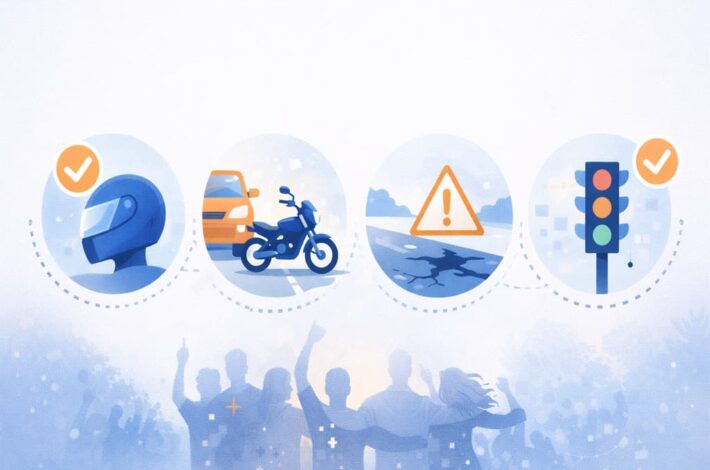
Riding a motorcycle opens up a world of freedom on the open road. However, that freedom comes with serious responsibility. As with choosing secure payment options for online transactions on sites like https://onlinecasinoduitsland.com/ or other digital platforms, selecting the right safety approach for motorcycle riding requires careful consideration and preparation.
New riders often underestimate the learning curve. The reality is that motorcycles demand more attention and skill than cars. Are you ready to commit to ongoing education and practice?
Essential Protective Gear
A quality helmet is non-negotiable. It should meet DOT or SNELL safety standards. Look for a snug fit that doesn’t move around when you shake your head.
Your gear protects you when things go wrong. Invest in a proper motorcycle jacket made from leather or abrasion-resistant textile. Gloves, boots, and reinforced pants complete your protective setup.
Gear checklist for beginners:
- Full-face helmet with safety certification.
- Abrasion-resistant jacket with armor.
- Motorcycle-specific gloves.
- Over-the-ankle riding boots.
- Riding pants or jeans with knee protection.
- Eye protection if not using a full-face helmet.
Weather-appropriate gear matters too. You’ll need different equipment for summer heat versus cold rain.
Basic Riding Techniques
Start in a parking lot or empty space. Get comfortable with the clutch, throttle, and brakes before hitting traffic. The friction zone of your clutch becomes second nature with practice.
Smooth inputs make safe riders. Jerky movements upset the bike’s balance and reduce your control. Practice slow-speed maneuvers until they feel natural.
Your body position affects how the motorcycle handles. Keep your head up and eyes forward, looking where you want to go. Keep your arms relaxed, not locked or tense.
Weight distribution changes how your bike responds. Lean with the motorcycle during turns rather than fighting against it. This takes time to learn but becomes intuitive.
Road Awareness and Defensive Riding
Assume other drivers don’t see you. Position yourself in their mirrors and avoid blind spots. Bright clothing and reflective gear significantly increase your visibility.
Use your headlight during the day. Most modern bikes have automatic daytime running lights for this reason. Make yourself as visible as possible at all intersections.
Common hazards to watch for:
| Hazard Type | What to Watch | Prevention Strategy |
| Road Surface | Gravel, oil, wet paint, metal plates | Reduce speed, stay upright |
| Weather | Rain, wind, fog | Increase the following distance |
| Traffic | Sudden stops, lane changes | Maintain escape routes |
| Debris | Potholes, branches, trash | Scan ahead constantly |
Intersections present the highest risk for new riders. Turning left across your path causes many accidents. Slow down and apply your brakes at every intersection.
Understanding Traffic Patterns
Watch the wheels of parked cars for signs of movement. Look through rear windows to spot drivers preparing to pull out. These small observations prevent surprises.
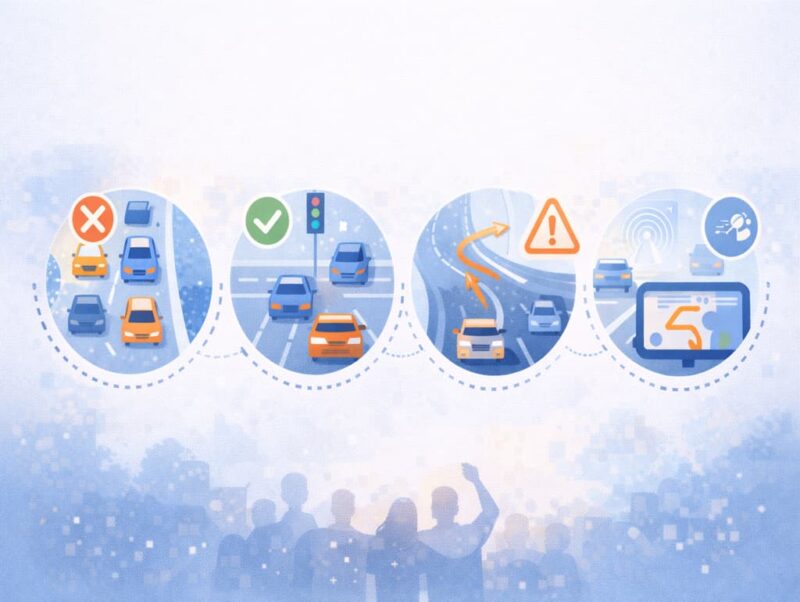
Drivers on cell phones pose serious threats. Give them extra space and prepare for unpredictable movements. Your safety depends on anticipating others’ poor decisions.
The left third of your lane offers the best visibility to oncoming traffic. It also keeps you away from road debris that collects in the center. However, you should adjust based on specific situations.
Change your position within your lane as conditions require. Move to avoid hazards while staying predictable to other drivers. Never ride between lanes in stopped traffic unless your state allows it.
Continuous Skill Development
Professional training accelerates your learning curve. Certified instructors teach techniques that keep you safer from day one. Many insurance companies offer discounts for completing approved courses.
Practice doesn’t make perfect if you’re practicing bad habits. Proper instruction prevents common mistakes from becoming ingrained behaviors.
Start with short rides in light traffic. Gradually increase distance and complexity as your confidence grows. Avoid highways until you’ve mastered basic bike control.
Night riding and bad weather require additional skills. Master daytime riding in good conditions first. Each new challenge should build on established competence.
How often are you practicing emergency stops and swerving? These skills deteriorate without regular practice.
Mental Preparation Matters
Stay focused every time you ride. Fatigue, stress, and distraction kill riders as surely as mechanical failure. Know when you’re not in the right headspace to ride.
Never ride impaired by alcohol, drugs, or strong emotions. Your reaction time and judgment are all that stand between you and serious injury. Respect the machine and the road.